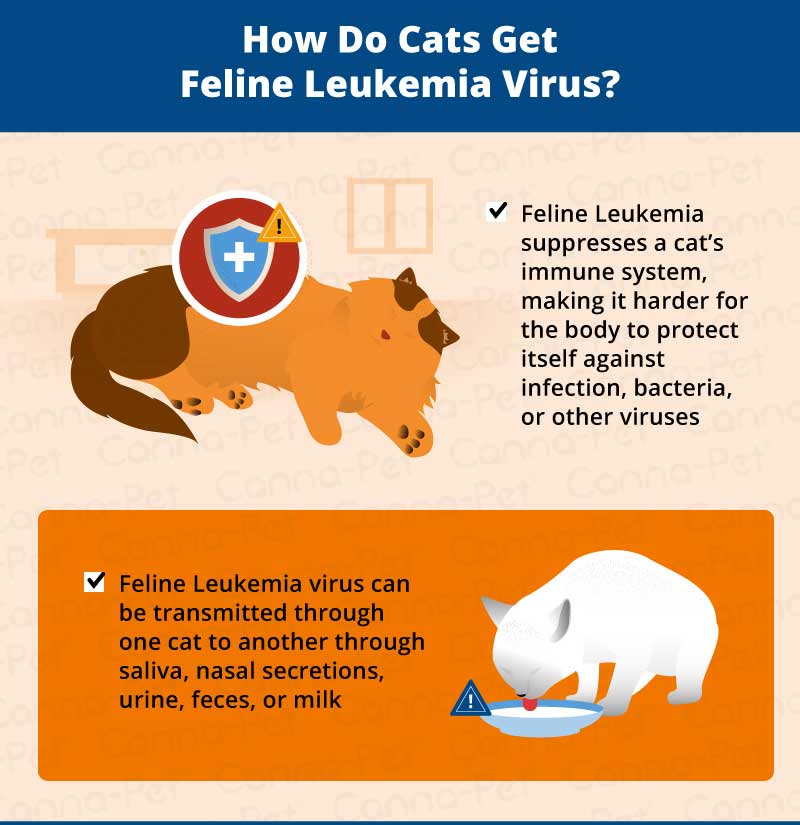
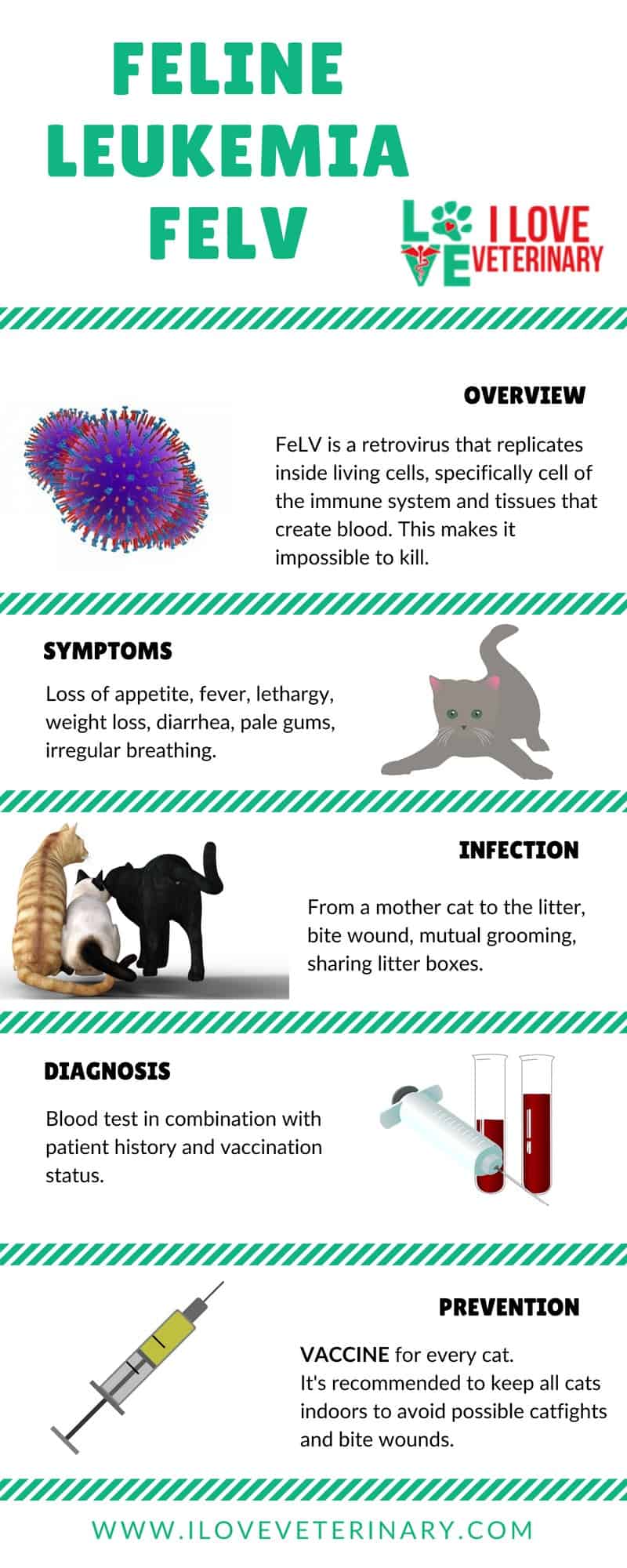
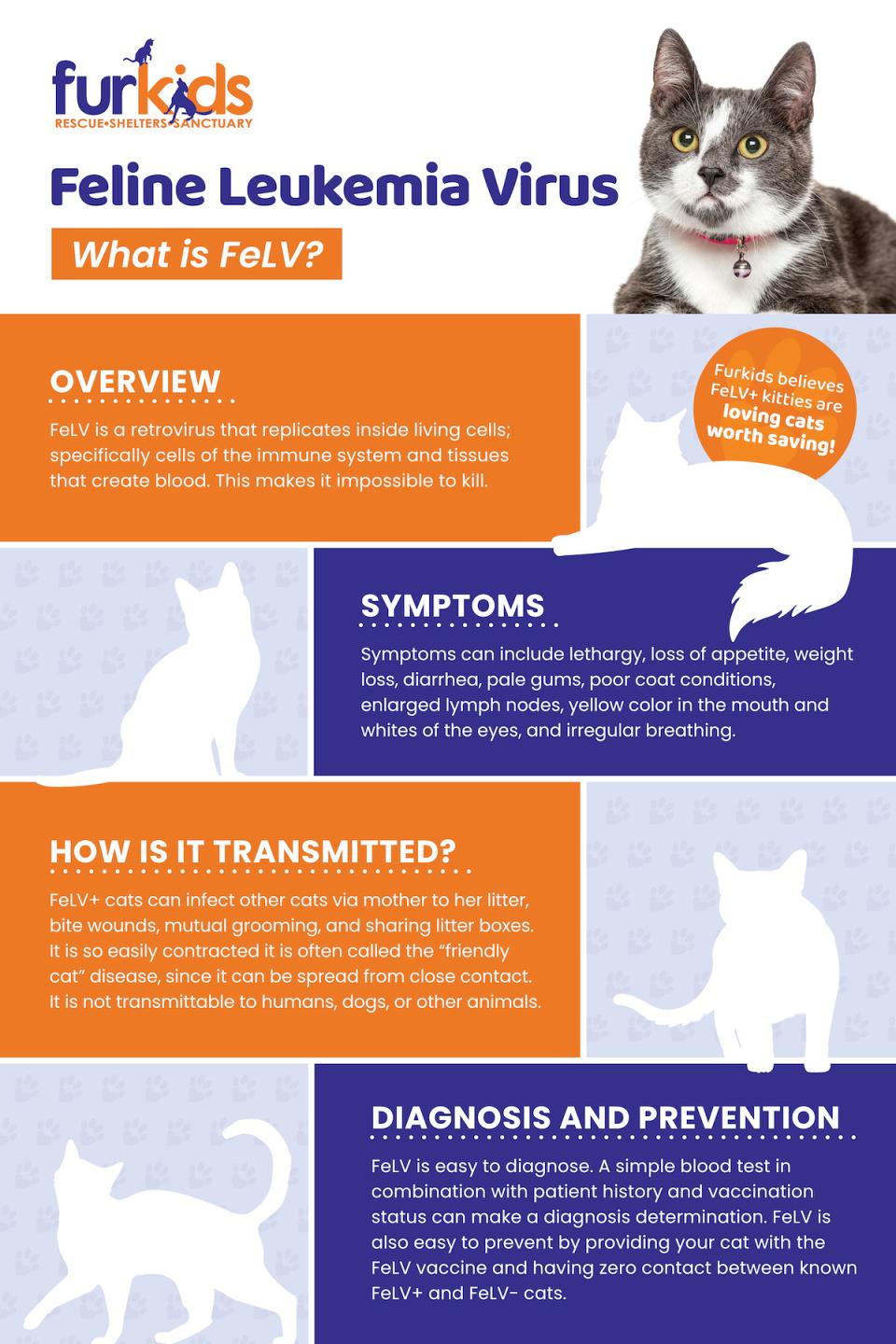
Feline leukemia virus is a retrovirus that infects cats. FeLV can be transmitted from infected cats when the transfer of saliva or nasal secretions is involved.
Feline Leukemia Virus (FeLV) and Lymphoma FeLV is a major contributor to lymphoma in cats, causing immunosuppression that leads to cancer and other diseases. It's transmitted through close contact, making vaccination crucial for prevention.
Classification of viral genome. Feline leukemia virus is a retrovirus in the family Oncovirinae.Other oncoviruses include feline sarcoma virus (derived from FeLV), mouse leukemia viruses, and two human T-lymphotropic viruses.

Feline leukaemia virus (FeLV) and feline immunodeficiency virus (FIV) are often tested for concurrently, due to the availability of many dual pointofcare (PoC) test kits.
Retroviral Involvement in Feline Lymphoma Infections with the retroviruses FeLV1,6,17,2125 and. FIV4,15,2629 have long been associated with development of lymphoma in cats.

Furthermore, visual representations like the one above help us fully grasp the concept of Feline Leukemia Virus In Lymphoma Treatment.
Feline Leukemia Virus (FeLV) especially in young cats. Feline Immunodeficiency Virus (FIV) linked to some forms. Age GI lymphoma is more common in older cats. Genetic factors.
Feline lymphoma is currently less commonly associated with retrovirus infections as the feline leukemia virus (FeLV) and feline immunodeficiency virus (FIV). This is thought to have caused a shift in the distribution of anatomical subtypes and eventually have led to poorer treatment...