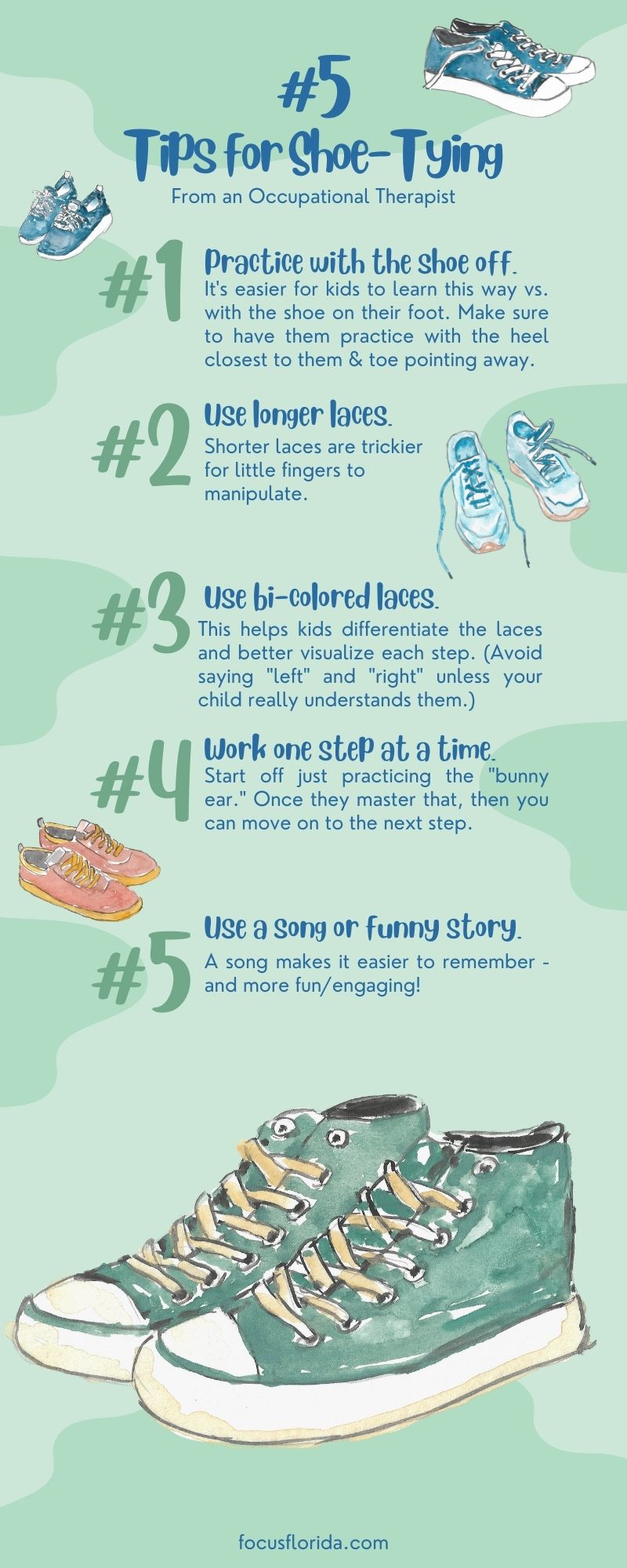
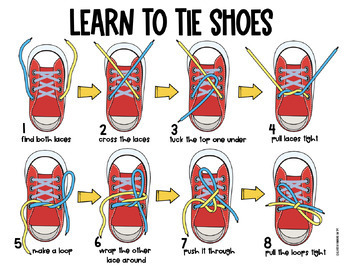
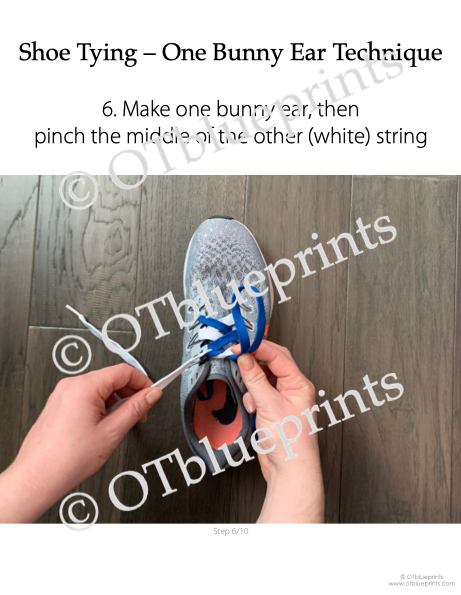
If teaching kids to tie their shoes is something that makes you want to give up and buy a pair of Velcro shoes, then you are in the right place. Here, you will find shoe tying resources for the therapist helping kids to work on the skills that go into successful shoe tying. You will find activities to build the underlying skills that kids need to t... See full list on theottoolbox.com The thing is that teaching kids to tie shoes is tricky! For some kids, tying shoelaces, is torture. They fumble the laces, make knots, or tie the laces so loosely that the shoes are not laced up. There is more to it than handing kids a pair of laces and ending up with neatly tied laces. Thats why I wanted to put together this resource on tying sho... See full list on theottoolbox.com Tying shoes can be a struggle for many kids and what works for one child wont work for another. Luckily there are many shoe tying methods out there. There are several different shoe tying methods that can work for your child. There are benefits to each of the different ways to tie shoes, and what works for one child may not work best for another c... See full list on theottoolbox.com Before starting with shoe tying instruction, it can be helpful to set the child up for success. Try these shoe tying tips and then check out the resources below: 1. Chose a shoe tying method and stick with it. 2. Use two different colored laces. 3. Practice from the childs point of view. Sit behind the child so your hands are positioned the same a... See full list on theottoolbox.com For a lot of kids the struggle of shoe trying is this difficult multi-step task where kids try a few times and then get frustrated. You might hear kids say things like: Tying a shoe is too hard., I cant tie shoes., or I cant do anything right, even tie a shoe. All of these are closed mindset thought processes that can limit the ability to p... See full list on theottoolbox.com Teaching a child to tie a shoe is not an easy process. There are many skills that a child needs to develop before they can even conceptualize tying a shoe. And then, the motor skills, executive functioning skills, bilateral coordination skills, are just the beginning. Think about the child that constantly puts their shoes on the wrong feet. This is... See full list on theottoolbox.com Lacing activities offers an opportunity for kids to work on so many skills that are essential to teaching kids to tie their shoes: manipulating string with dexterity, precision in fine motor movements, the pincer grasp to pinch and hold the string, bilateral coordination, and eye-hand coordination. Try these lacing activities for practice and pre-s... See full list on theottoolbox.com These shoe tying crafts are a fun way to work on the skills kids need to tie their shoes: fine motor skills, strength, motor planning, and precisionand they will be proud of their completed craft. Add these shoe tying crafts to your OT toolbox! See full list on theottoolbox.com Kids need several developmental milestones in place for shoe tying! In order to tie shoes, there are many fundamental skill areas that are needed: 1. Visual motor skills (eye hand coordination) 2. Fine Motor skills (hand strength, pinch strength, separation of the sides of the hand, finger isolation, arch development, stabile wrist) 3. Bilateral co... See full list on theottoolbox.com In conclusion, teaching kids to tie their shoes is an essential skill that can be made enjoyable through a variety of tips, tricks, and activities. By incorporating playful techniques, real-world experiences, and cultural perspectives, parents and educators can create a supportive and engaging learning environment. Breaking Down the Shoe-Tying Process Teaching someone how to tie their shoes can seem daunting, but breaking the process down into manageable steps makes it much easier. The key is patience and repetition. Start with the basics and gradually introduce more complex elements until the learner masters the skill. This will ensure success and build confidence. This section will outline a clear ... Conclusion Mastering the skill of shoe tying is a significant achievement, particularly for individuals with developmental challenges or disabilities. By employing task analysis and utilizing ABA strategies, we can break down this seemingly complex task into manageable steps. Remember that progress may vary from person to person, and patience, persistence, and individualization are key to success. How do I track progress when teaching shoe tying? Consistency: Maintain a consistent teaching approach and environment to minimize confusion and maximize learning. Monitoring and tracking progress is an integral part of ABA-based instruction. Heres how you can effectively track progress when teaching shoe tying: Data Collection: Keep detailed records of each teaching session. How do I overcome the pitfalls of shoe tying? To overcome these pitfalls of shoe tying try the strategies: Success Tip number 1- Practice on a daily basis. There needs to be commitment from the child and the parent to put time into practicing this skill. Success Tip number 2- Write down your goals. Success tip number 3- Use a growth mindset for shoe tying. What are the different shoe tying methods? Here are some videos that shoe different shoe tying methods: Bunny Ears Method One Loop Shoe Tying Method The Ian Knot (Fast knot method) One Handed Shoe Tying Sometimes shoe tying is just so frustrating for a child, due to a variety of reasons, that you might need another way to fasten shoes (without having to keep buying velcro fastening shoes). How do you individualize shoe tying instruction? Here are some considerations for individualizing instruction: Assessment of Readiness: Ensure the learner is developmentally ready for shoe tying. Assess fine motor skills, hand-eye coordination, and attention span. Adaptations: Consider using alternative methods or adaptive devices if traditional shoe tying proves too challenging. Conclusions: Celebrating Independence Through Shoe-Tying Teaching kids to tie their shoes is an invaluable skill that promotes independence and builds confidence. By implementing various strategies, engaging activities, and being mindful of individual learning styles, parents and educators can create a positive learning experience.
As we can see from the illustration, Effective Decrement Strategies For Successful Shoe-Tying Instruction has many fascinating aspects to explore.